
 Only 1 of 60 in the World!
I’m yelling at my girls after waking up late on a school day, “Hurry up! Get your shoes on! Get out the door! We are going to be late! Again!”
When we arrive at the school, my daughter, Megan, tells me that I still have my slippers on and I have to meet with the bank in five minutes! Too late to change!
I was addicted to being busy. The surge of adrenaline racing from one event to the next, arriving in a whirlwind of importance, papers flying, my mind racing, and always feeling behind.
But one day that all changed. While horseback riding, doing what I had done 100 times before, I had a serious accident. Physicians diagnosed me with an acquired brain injury and labeled me “completely disabled”.
Then another surprise. Although I lived in Canada all my life, 10 days after the traumatic brain injury, I awoke unable to speak. Eventually language came back to me…but it was with a Scottish accent…even with the little nuances! My neuropsychologist informed me I had “Foreign Accent Syndrome”! I am 1 of only 60 people in the world who has had a traumatic brain injury and acquired a foreign accent.
As funny as the foreign accent seemed, other symptoms weren’t so amusing. Post-concussion symptoms challenged me. The person I had been had died. I was no longer a busy, thriving entrepreneur, wife and mother. I was anxious, overwhelmed, depressed, frustrated and pining for my previous life.
Until one day I experienced clarity through my horse Malachi. My horse showed me how truly fragmented, distracted, and unfocused my previous life was.
I knew in that moment that if I could pause, connect, and truly be present, focused and aware, I could be so much more effective.
After three years of struggle and research, I have confirmed that we can change our brains to help the mind overcome the anxiety and common traps that distract, disrupt, and lock us into ineffectiveness. From intense study and personal insights, I created the NeuroMindSHIFT™ Process.
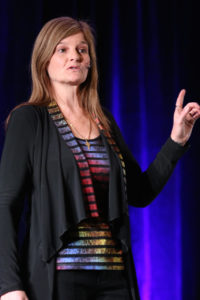
Today, I speak on large stages and share my NeuroMindSHIFT™ Process with others. It’s an effective process because the simple tools and techniques can be used right away to strengthen the mind’s resilience to chaos and distractions and help leaders and teams shift to positive action rather than be frozen in the ineffectiveness of disruption.
My energetic and interactive keynote and breakout sessions train leaders and teams in the NeuroMindSHIFT™ Process so they can:
- Boost their mind’s resilience and ability to regain focus quickly when disrupted and drawn off task.
- Get unstuck from the common mind traps that lock them into distractions and keep them from moving forward in their tasks for the day.
- Create daily habits to enhance the mind’s ability to make better decisions, create more effective problem solving and emotional regulation, and gain insightful perspective.
Leaders and teams become tenacious and more invested in their tasks and goals with authentic meaning and directed purpose.
